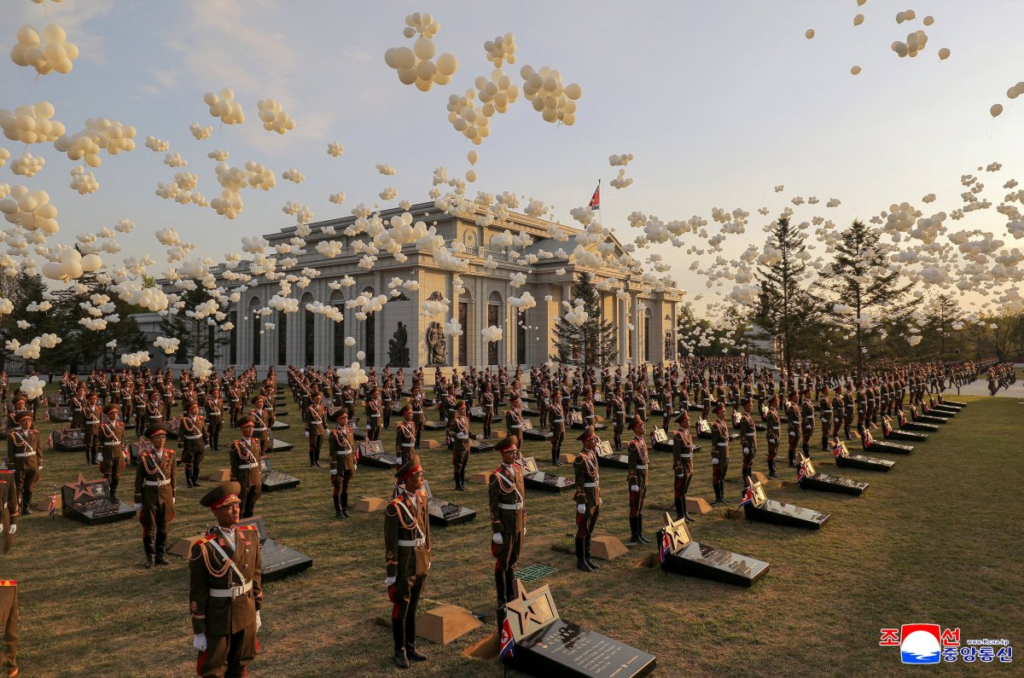
North Korea’s decision to open a museum commemorating troops killed while fighting for Russia marks a stark escalation in what was once a shadowy alliance. Long suspected but never officially confirmed, North Korean troop involvement in Ukraine has now been memorialized in Pyongyang—not with silence, but with state-sanctioned ceremony and ideological reinforcement. This museum isn’t just a tribute to the dead; it’s a calculated act of political theater, signaling deeper military entanglement and a shift in how Pyongyang legitimizes foreign combat for domestic consumption.
The move confirms long-standing intelligence reports from South Korea, the United States, and NATO sources indicating that North Korean soldiers have been deployed, trained, and killed in support of Russian operations in Ukraine. What was once speculation is now etched in marble and glass behind locked museum doors—accessible only to select cadres, party officials, and carefully vetted citizens.
A Propaganda Machine Activated
The museum’s primary function extends far beyond remembrance. In North Korea, death in service of the state is always political. By memorializing soldiers who died thousands of miles from home—on battlefields not their own—the regime is reframing foreign war as patriotic sacrifice.
Inside, visitors reportedly encounter:
- Life-sized dioramas of trench combat in eastern Ukraine
- Personal effects of deceased soldiers: dog tags, salvaged uniforms, handwritten letters
- Video testimonials from “survivors” (likely scripted or fabricated)
- A wall of portraits labeled “Martyrs of the Anti-Imperialist Front”
These displays are carefully curated to link the Ukraine conflict to North Korea’s own survival narrative. The official line: Russian war = anti-Western resistance = defense of DPRK sovereignty. This ideological bridge allows Kim Jong Un to justify sending troops abroad without eroding domestic loyalty.
Historically, North Korea has avoided acknowledging battlefield deaths outside its borders. Even during the Vietnam War, when North Korean pilots reportedly engaged U.S. forces, there was no public recognition. The current museum breaks that precedent—suggesting not just involvement, but institutional commitment.
The Troops Who Never Came Home
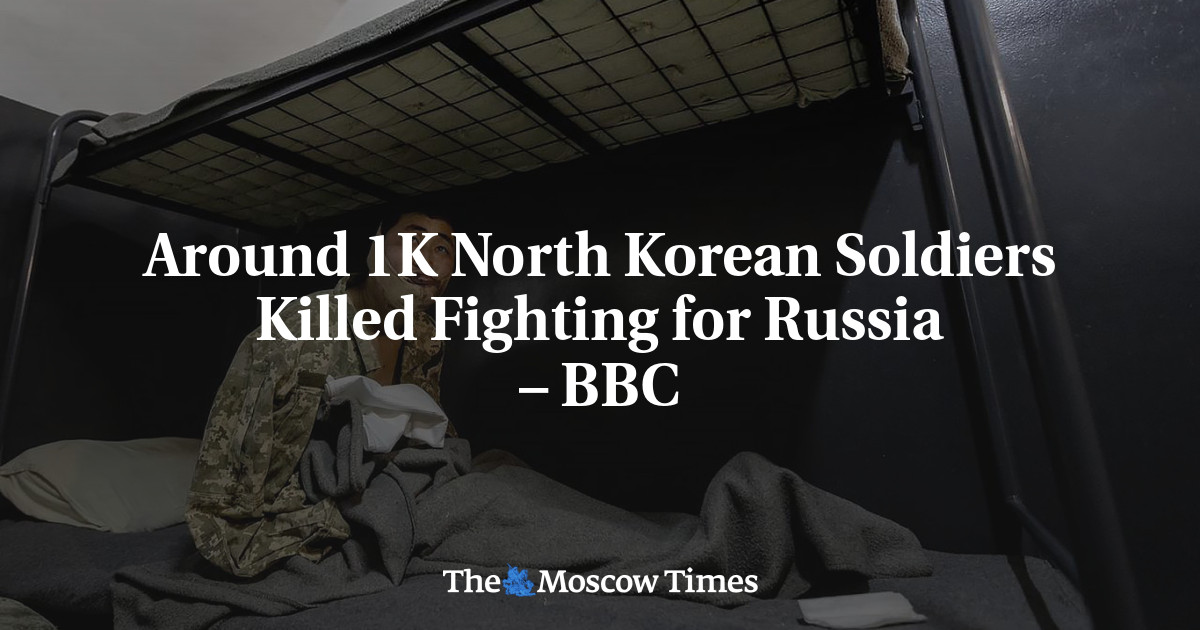
Estimates suggest between 1,500 and 2,000 North Korean troops have been deployed to Russia since late 2023. Satellite imagery, intercepted communications, and defector testimonies indicate specialized units—likely from the 108th Mechanized Corps and Reconnaissance Bureau—were sent to Belarus for joint training before deployment into Ukraine.
Casualty figures remain classified, but South Korean intelligence claims at least several hundred North Koreans have been killed or wounded. The museum, while not listing exact numbers, features over 60 named individuals—each labeled a “volunteer for the global anti-fascist struggle.”
Families of the dead are reportedly compensated with:
- Priority housing in Pyongyang
- Access to exclusive food rations
- Educational placements for children
- Official designation as “Nation’s Kin” (a status akin to war heroes’ families)
But grief is tightly controlled. Public mourning is forbidden. Funerals are private. The state controls the narrative from death to memorialization—turning loss into loyalty.
Why Now? Timing and Strategic Messaging
The museum’s unveiling coincides with a broader shift in North Korea’s foreign posture. After years of isolation, Pyongyang is repositioning itself as a key player in a multipolar world order opposed to U.S. dominance. The alliance with Russia—sealed through arms shipments, satellite intelligence sharing, and now human sacrifice—has entered a new phase.
Opening the museum serves multiple strategic goals:
- Solidifies the Russia alliance – Honoring dead soldiers makes withdrawal politically costly for both nations.
- Deters internal dissent – Glorifying foreign combat discourages questioning of military decisions.
- Projects power externally – It signals that North Korea is no longer just a regional threat but a global actor willing to bleed for its allies.
- Recruits future fighters – The museum is expected to become part of mandatory political education for military cadets.
This timing is no accident. With winter lulls in Ukraine allowing for reorganization, and Western aid to Kyiv slowing, Moscow and Pyongyang are leveraging symbolic victories. The museum is one such victory—a monument not to peace, but to entrenchment.
How the World Is Reacting
The international response has been swift but limited. The U.S. State Department called the museum “a grotesque celebration of foreign war crimes,” while NATO labeled it evidence of “deepening rogue-state collaboration.” South Korea summoned the Russian ambassador and urged Beijing to pressure Pyongyang.
China has remained characteristically cautious. While publicly reiterating its stance on non-interference, internal signals suggest growing unease. Beijing has long sought to maintain influence over both Moscow and Pyongyang—but a formalized military pact between the two could destabilize Northeast Asia.
Sanctions remain a tool, but their effectiveness is questionable. North Korea has already endured decades of isolation. For Kim Jong Un, the museum isn’t a liability—it’s a point of pride. The more the West condemns it, the more it validates the regime’s “besieged fortress” narrative.
The Human Cost Behind the Monuments
While the museum presents a sanitized version of sacrifice, the reality for North Korean soldiers in Ukraine is grim. Multiple defector accounts and military analysts describe:
- Inadequate winter gear and outdated equipment
- High casualty rates in frontal assaults
- Limited communication with home
- Psychological breakdowns due to disorientation and fear
One defector, a former military trainer who defected in 2024, described the deployment as “a death lottery.” “They were told they’d be training Russian troops,” he said. “Instead, they were thrown into trench warfare with no extraction plan.”
Families often learn of deaths through secondhand whispers—never official notices. Some receive generic condolence letters months later. The museum’s portraits may immortalize the dead, but for their loved ones, there is no closure—only silence and state-mandated gratitude.
A New Chapter in Asymmetric Alliances
The museum represents more than remembrance—it’s institutionalization. By memorializing foreign combat deaths, North Korea has crossed a threshold. It is no longer just supplying weapons; it is investing blood.
This sets a dangerous precedent. If dying for Russia is honorable, what about future conflicts? Could North Korean troops be sent to support Iran, Venezuela, or other anti-Western regimes? The museum normalizes the idea of overseas sacrifice, making future deployments easier to justify.
Moreover, it signals a shift in North Korea’s military doctrine. For decades, the focus was on survival and deterrence via nuclear threats. Now, there’s a growing emphasis on expeditionary capability—even if limited. The museum is the first public monument to that shift.
What This Means for Global Security
The implications are far-reaching:

- Proliferation risks: Military collaboration may extend to joint weapons development.
- Recruitment pipelines: North Korea could begin recruiting more aggressively from impoverished regions, framing foreign war as a path to status.
- Hybrid warfare expansion: North Korean troops may be used in deniable operations—plausibly unacknowledged, but ideologically committed.
- Regional instability: Japan and South Korea may accelerate defense spending, fearing broader conflict spillover.
The museum is not an endpoint. It’s an anchor point—a permanent fixture in Pyongyang’s evolving security paradigm. It tells citizens, allies, and adversaries alike: North Korea is no longer watching from the sidelines.
The Museum as a Tool of Total Control
In any other country, a war museum might serve as a place of reflection, mourning, or historical education. In North Korea, it serves a singular purpose: control. Every exhibit is designed to reinforce loyalty, suppress doubt, and justify sacrifice.
Consider the symbolism:
- The museum is reportedly located near the Victorious Fatherland Liberation War Museum—linking Ukraine to the Korean War narrative.
- Soldiers are referred to as “volunteers,” despite evidence of coercion and conscription.
- No mention is made of Ukraine as a sovereign nation; it is referred to only as “occupied Eastern Europe.”
This is historical revisionism at state level—using death as a building block for ideology. The museum doesn’t ask visitors to question. It demands they believe.
Closing: A Monument to Escalation
North Korea’s museum for troops killed fighting for Russia is not about honoring the dead. It’s about mobilizing the living. It transforms foreign war into domestic legitimacy, turning battlefield losses into propaganda wins.
For the outside world, this should be a warning. When a regime begins memorializing its citizens dying in distant conflicts, it has committed to something far greater than alliance—it has committed to endurance, escalation, and ideological warfare.
The museum stands as a cold, polished monument to that commitment. And unless the international community develops new strategies to counter this deepening nexus of rogue states, it may not be the last.
Frequently Asked Questions
Why would North Korea send troops to fight for Russia? North Korea gains military technology, economic aid, and political leverage in exchange for manpower and weapons, strengthening its position against Western pressure.
Is the museum open to the public? Access is highly restricted. Only party members, military personnel, and approved citizens are permitted entry—typically during guided political education tours.
How many North Korean soldiers have died in Ukraine? Exact numbers are unconfirmed, but South Korean and U.S. intelligence estimates range from several hundred to over 1,000 casualties.
Does Russia acknowledge North Korean troop involvement? No. Russia denies any such deployment, and North Korea refers to the soldiers as “volunteers” in unspecified “anti-imperialist missions.”
What kind of training did these troops receive? They underwent joint training in Belarus, focusing on urban combat, artillery coordination, and electronic warfare—skills relevant to eastern Ukraine’s terrain.
Could this lead to direct conflict with NATO? While direct confrontation remains unlikely, the presence of North Korean troops increases the risk of miscalculation or escalation, especially if Western troops encounter DPRK forces.
What happens to the families of dead soldiers? They receive state benefits—such as housing and food privileges—but are forbidden from public mourning or discussing the circumstances of death.
FAQ
What should you look for in North Korea Opens Museum for Troops Killed Fighting for Russia? Focus on relevance, practical value, and how well the solution matches real user intent.
Is North Korea Opens Museum for Troops Killed Fighting for Russia suitable for beginners? That depends on the workflow, but a clear step-by-step approach usually makes it easier to start.
How do you compare options around North Korea Opens Museum for Troops Killed Fighting for Russia? Compare features, trust signals, limitations, pricing, and ease of implementation.
What mistakes should you avoid? Avoid generic choices, weak validation, and decisions based only on marketing claims.
What is the next best step? Shortlist the most relevant options, validate them quickly, and refine from real-world results.